Four American Heritage Crew Sue Tanker Owner Over New Orleans Capsize
Four riverboat crew members sued the tanker's owner and manager on November 14, and the NTSB has not said why its rudder stuck.
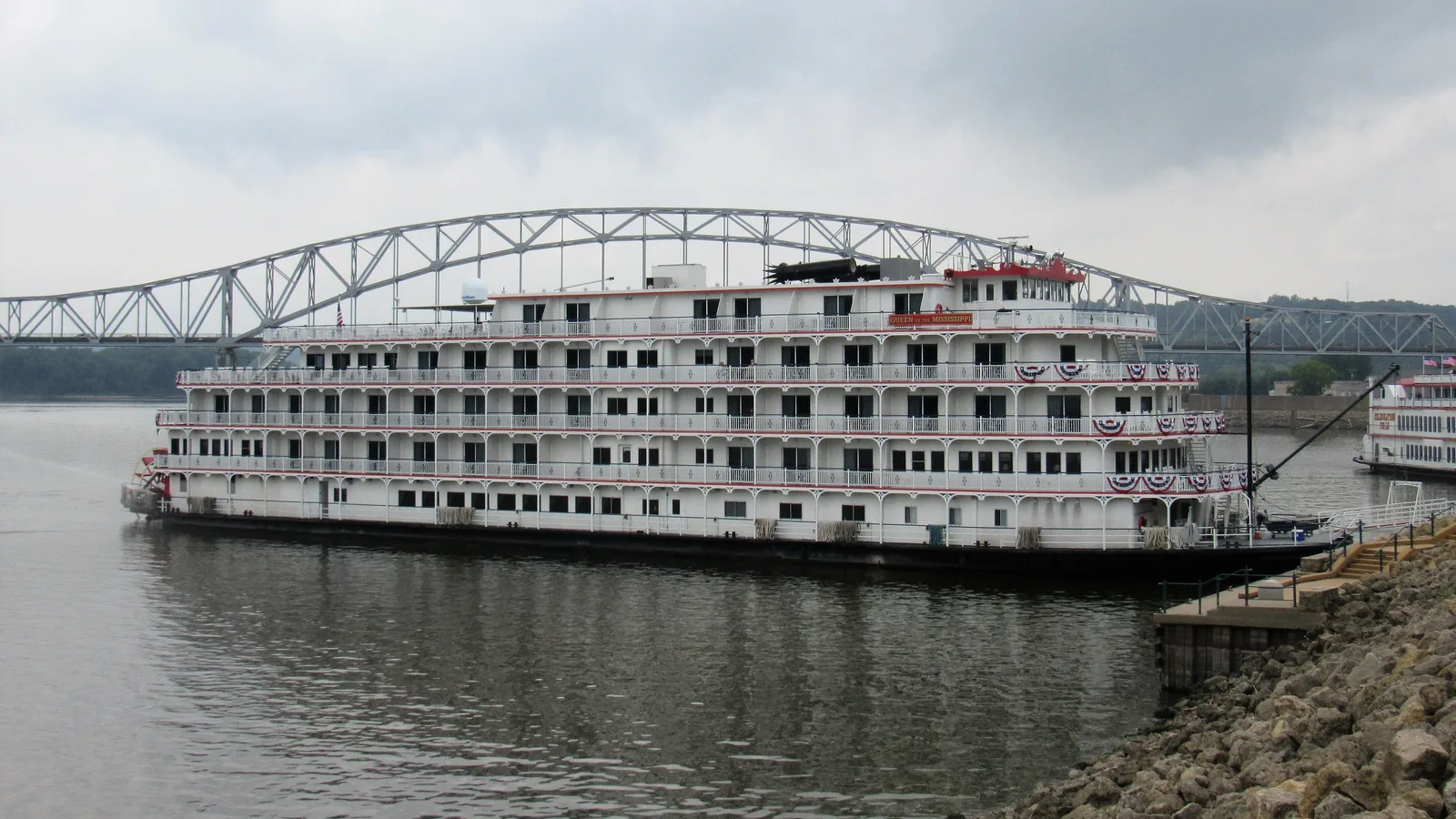
Four crew members of the riverboat American Heritage have sued the owner and the safety manager of the tanker Atlantic Asphalt, which struck their vessel at its New Orleans dock on November 13 and capsized it. Their complaint, filed in federal court on November 14, asks for a jury trial and for damages that include punitive damages.
It is at least the second federal suit over the allision. The Port of New Orleans went to court within hours and won a warrant for the tanker’s arrest. Officials said in the days after the allision that all 191 passengers and crew aboard the riverboat were rescued and that 32 people were taken to hospitals.
The complaint alleges that the owner, the manager or both entrusted the ship to a master and crew they knew could not operate it safely. It was filed the day a Coast Guard captain said the tanker appeared to have had a steering problem, and one day before federal investigators said its rudder had stuck to starboard two minutes before impact. They have not said why.
The Complaint Blames the Tanker’s Crew and Its Upkeep
The suit, McKnight v. Nave Shipping S.A., names Nave Shipping S.A. of Liberia, described from public records as the tanker’s registered owner, and Thome Ship Management Pte Ltd of Singapore, described as its ISM manager, the company responsible for the International Safety Management Code aboard. It lists 14 alleged failures.
The four plaintiffs were working aboard the American Heritage, which the complaint says is owned or operated by American Cruise Lines, while it was docked at the Thalia Street Terminal to let passengers off. The complaint puts the allision at about 12:29 p.m. and says the capsize threw them into the Mississippi River “not knowing if they were going to live or die.” They live in Louisiana, North Carolina, Washington and Georgia. The complaint says each suffered life-changing physical and psychological injuries and does not describe them further.
The alleged failures include an unseaworthy ship, an improperly trained crew, poor maintenance of the tanker and its equipment, no adequate safety meetings on what to do if the steering failed, and no emergency plan for a loss of control. The complaint describes the Atlantic Asphalt as a 525-foot (160-meter) asphalt tanker built in 2017 and flagged in the Marshall Islands. No court has ruled on any of the allegations.
The complaint also invokes three admiralty presumptions. One comes from The Oregon, an 1895 Supreme Court case, and holds that a moving vessel that strikes a stationary object is presumed to be at fault. The complaint says that presumption applies here. Where a court applies it, the moving vessel’s side has to rebut it.
The damages sought are medical costs, physical and mental pain and suffering, the fear the crew felt as the boat went over, and punitive damages under general maritime law. The complaint names no dollar figure beyond the $75,000 minimum for this kind of federal case. Two New Orleans firms signed it, Lambert, Zainey, Smith & Soso and Miller Thibodeaux Dysart Veith & Paschal.
The Port of New Orleans Won a Warrant for the Tanker First
The Board of Commissioners of the Port of New Orleans sued on November 13, the day of the allision, and named the tanker itself along with Nave Shipping and Thome. Chief Judge Wendy B. Vitter granted a warrant of arrest the same day, and the docket shows it was issued.
The port’s complaint estimates physical damage to its Thalia Street Terminal at more than $1 million and says the full extent is still under investigation. It claims a maritime lien on the ship, which the arrest is meant to secure. The law firm Jones Walker represents the port.
The crew’s suit takes a different route. It is a personal injury claim against the two companies, and the ship is not a defendant.
Baird Maritime, in its account of the port’s suit, reported that OSM Thome said it was “fully complying with the local authorities” during the investigations. That statement does not address the crew’s allegations. The docket in the crew’s case shows summonses issued on November 16, and it showed no answer from either company when Hullside viewed it on November 17.
The NTSB Has a Stuck Rudder and No Cause Yet
At a November 15 briefing, the National Transportation Safety Board said a preliminary review of the tanker’s voyage data recorder showed a steering casualty at about 12:26 p.m. that left the rudder stuck to starboard. The Atlantic Asphalt hit the American Heritage at about 12:28 p.m., WVUE Fox 8 reported.
Investigators downloaded more than nine hours of data from the recorder. Investigator in charge Bart Barnum said the audio captured the ship’s whistle, radio requests for assistance, commands to deploy the anchors and emergency ship handling orders.
The NTSB has not said what caused the steering casualty. Coast Guard Capt. Melanie Burnham had said on November 14 only that the tanker appeared to have had a steering problem and that the exact cause was not known. It planned to begin interviewing the tanker’s crew on November 16 and expects a preliminary report within 30 days, with a final report in 18 to 24 months.
Hullside’s Take
The crew’s complaint lists a steering failure among the things the tanker’s managers should have prepared for, and the NTSB’s preliminary data now puts a steering casualty two minutes before impact. The board has not said what failed, and the suit’s claims about maintenance and training depend on that. The preliminary report is the first place an answer can come from. Until then, the claims about an untrained crew and a poorly kept ship are a plaintiff’s allegations, of a kind The Maritime Executive calls a standard starting point for a maritime claim. A stuck rudder, if the recorder data holds, would explain why the tanker turned. It doesn’t say whose fault that was.
Sources: The Maritime Executive, McKnight v. Nave Shipping S.A., No. 2:26-cv-02615 (E.D. La.), Board of Commissioners of the Port of New Orleans v. Atlantic Asphalt MV, No. 2:26-cv-02611 (E.D. La.), WVUE Fox 8, NPR, Baird Maritime
Hullside uses automated tools to support research and source retrieval. All reporting and editorial perspectives are by Haye Kesteloo. Read our editorial standards or report a correction.
Hullside reports under its editorial standards. See a mistake? Corrections.