OneWater Sold Fewer New Boats at Higher Margins and Still Lost $8.4M
The dealer group's fiscal 2026 loss narrowed from $116.2 million, and it now lists 88 retail locations, seven fewer than a year ago.
OneWater Marine sold fewer new boats in fiscal 2026, kept more of each sale as gross profit, and still finished the year with a net loss of $8.4 million. The Buford, Georgia dealer group reported on November 17 that revenue for the year ended September 30 fell 5% to $1.78 billion and same-store sales fell 3.8%.
The loss is a fraction of the $116.2 million OneWater lost in fiscal 2025, when it wrote down $145.8 million of goodwill and intangible assets. Adjusted EBITDA, the profit measure the company steers by, rose 7.4% to $75.3 million.
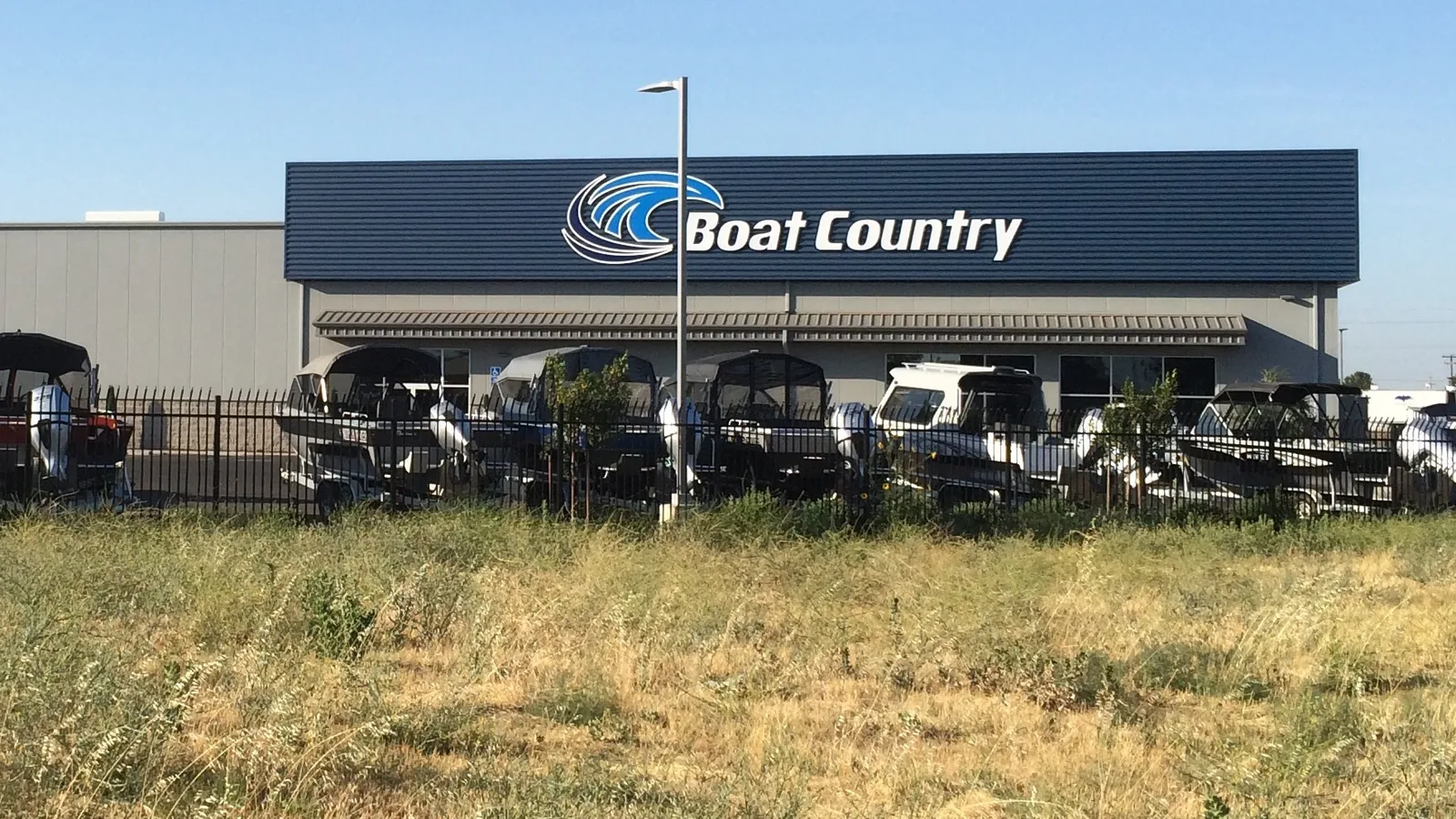
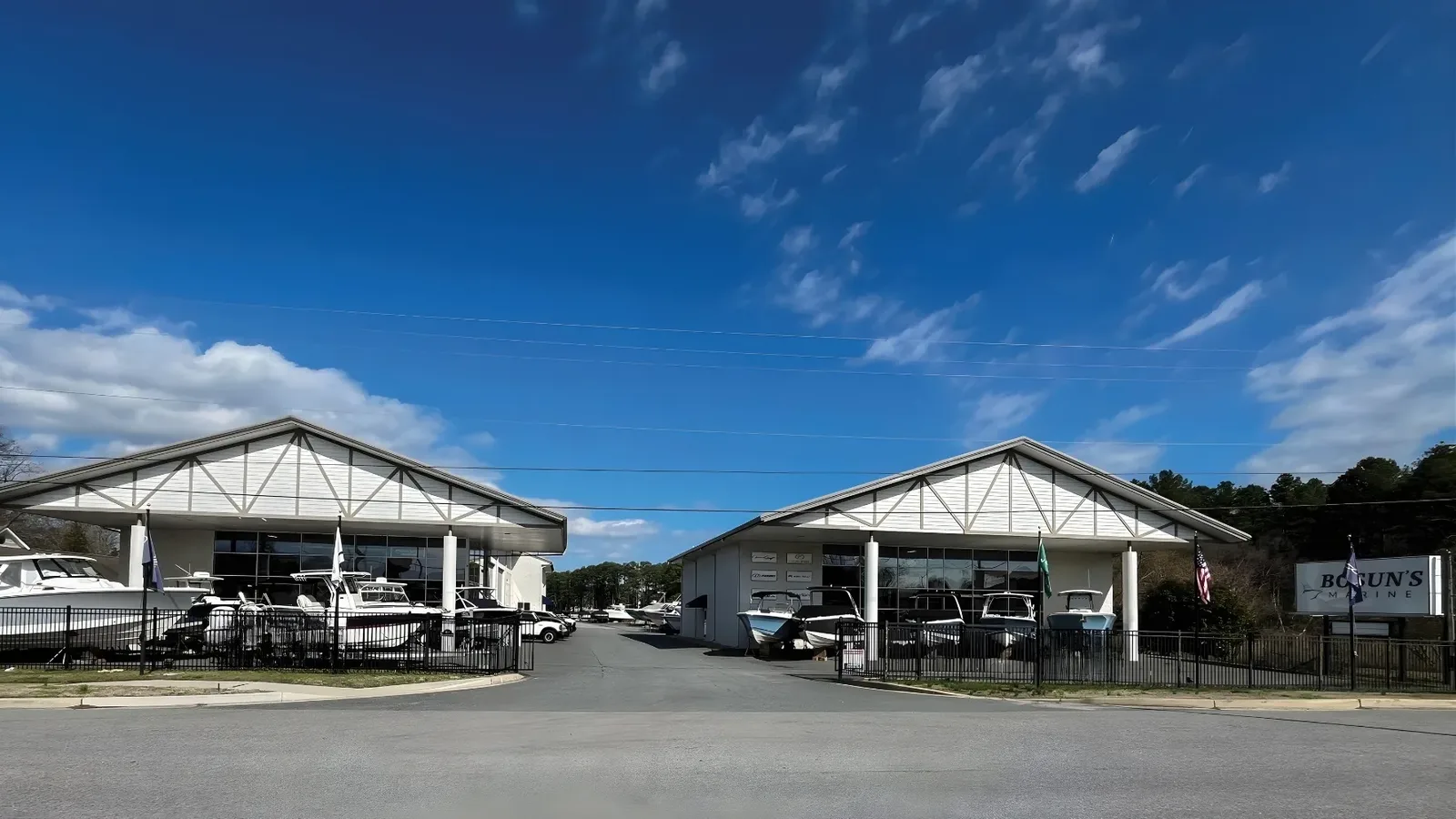
The company also lists fewer stores than it did. Its release counts 88 retail locations in 17 states, against 95 in 19 states a year ago. Income from operations came to $53.4 million, and the year ended in a loss anyway.
Interest Cost OneWater More Than It Earned From Operations
OneWater Marine recorded $56.9 million of interest expense in fiscal 2026, by Hullside’s addition of the two interest lines in its earnings release, against $53.4 million of income from operations. Floor plan interest, the cost of financing boats on its lots, was $26.8 million. Other interest was $30.1 million.
Both lines are lower than a year ago, when the two added up to $64.7 million. The operating figure is also after $15.2 million of restructuring and impairment charges, and the company says the year’s results include $14.9 million of non-cash impairment and business disposition charges. Add the $15.2 million back and income from operations would have been $68.6 million, by Hullside’s calculation, more than the interest bill. The figures are unaudited.
OneWater spent the year paying lenders down. Long-term debt fell $69.8 million to $342.3 million, helped by the sale of Ocean Bio-Chem, the maker of Star brite boat-care products, to Recochem on February 2 for an estimated $50.0 million in cash, according to the 8-K on the sale. The company puts its adjusted net debt at 3.8 times adjusted EBITDA, down from 5.1 times. Floor plan borrowings, which sit outside that ratio, were $407.5 million on September 30.
On November 10 it pushed out both maturities. The term loan now runs to July 31, 2029 and the floor plan facility to March 1, 2029, with floor plan capacity raised by $50.0 million to $547.1 million. The 8-K on the amendments includes a term the press release does not mention: the floor plan amendment also removes $38.7 million of availability for overtrade capacity. Total liquidity, cash plus what it can still borrow, was about $58.5 million at year end, down from about $67 million a year earlier.
New Boats Brought In Less Revenue and More Gross Profit
New boat revenue fell 6.2% to $1.09 billion on lower unit sales, while gross profit on new boats rose 3.6% to $189.8 million. By Hullside’s calculation from those two figures, new-boat gross margin was 17.5%, up from 15.8% in fiscal 2025. The release gives no unit counts.
Pre-owned revenue grew 3.6% to $376.9 million, which the company attributes to a higher average price per unit, and gross profit on those boats rose 12.4% to $73.7 million. That works out to a margin of 19.6%, against 18.0% a year earlier, on the same calculation.
In the fourth quarter new boat revenue fell 4.7% to $261.6 million, with fewer units sold at a higher average price, and pre-owned revenue slipped 0.4%. The quarter ended with net income of $0.5 million, against a net loss of $113.0 million in the same quarter a year earlier. Finance and insurance income fell 5.7% for the year to $51.8 million.
Service, parts and other revenue dropped 10.6% to $264.0 million, which the company puts down primarily to the Ocean Bio-Chem sale. It says the remaining business grew and gives no figure. Inventory ended the year at $507.0 million, 6.1% below the $539.8 million of a year before, and the company credits both inventory management and the divestiture.
OneWater describes its 3.8% same-store decline as “outperforming broader industry.” The release offers no industry number to measure that against. In its July release the company said it expected the industry to be down high-single digits for the fiscal year.
OneWater Forecasts a Flat Market Again, With Seven Fewer Stores
For fiscal 2027 the company expects industry unit sales to be flat and its own same-store sales to be flat to slightly positive. It forecasts revenue of $1.78 billion to $1.88 billion, adjusted EBITDA of $80 million to $95 million and adjusted diluted earnings per share of $0.75 to $1.00.
OneWater made the same call on the market a year ago. Its November 2025 guidance assumed flat industry unit sales, flat same-store sales, revenue of $1.83 billion to $1.93 billion, adjusted EBITDA of $65 million to $85 million and adjusted diluted earnings per share of $0.25 to $0.75. It lowered that range in February to reflect the Ocean Bio-Chem sale and again in July, to $1.75 billion to $1.80 billion, and the final numbers landed inside the July ranges. Adjusted diluted earnings per share came in at $0.49, up from $0.44.
Executive Chairman Austin Singleton said in the release that the company enters fiscal 2027 “from a position of strength,” and cited healthy inventory, a more focused portfolio and a stronger balance sheet.
The release does not explain the lower store count. The company still listed 95 locations in February, then 91 in 18 states in July and 88 in 17 states on November 10. Its distribution centers or warehouses went from nine to six by February. The release attributes lower revenue to “the planned exit of certain brands” and the Ocean Bio-Chem sale, and does not say how the count came down, whether by closing, sale or consolidation, or which two states it left. The company’s standard description of itself has changed too. As recently as its November 10 release it called itself “one of the largest and fastest-growing premium marine retailers” in the country, and the November 17 release drops “fastest-growing.”
Hullside’s Take
OneWater’s year shows how one of the country’s largest boat dealers is handling a slow market. On these numbers I don’t think it is cutting prices to move boats. It sold fewer new boats, kept a bigger share of each sale, carried 6% less inventory and now lists seven fewer stores. Its fiscal 2027 plan asks for as much as $19.7 million more adjusted EBITDA from an industry it expects to sell no more boats. I read that plan as leaning on margin and cost more than on volume. A $56.9 million interest bill could push a dealer the other way, toward moving stock at a discount, but OneWater has less inventory to clear than it did a year ago and its lenders have just given it until 2029. I’d expect its stores to hold their prices this winter.
Sources: OneWater Marine fiscal 2026 earnings release (Form 8-K, November 17, 2026), Form 8-K on the credit amendments (November 12, 2026), Form 8-K on the Ocean Bio-Chem sale (February 6, 2026), February 2026 guidance update, fiscal third quarter 2026 release, fiscal 2025 earnings release
Hullside uses automated tools to support research and source retrieval. All reporting and editorial perspectives are by Haye Kesteloo. Read our editorial standards or report a correction.
Hullside reports under its editorial standards. See a mistake? Corrections.